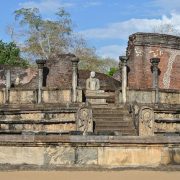
Nestled in the heart of Sri Lanka’s North Central Province, Polonnaruwa stands as a testament to the island’s glorious past. Once the medieval capital of Sri Lanka from the 11th to 13th centuries, this UNESCO World Heritage Site is an archaeological treasure trove that beautifully preserves the grandeur of a bygone era.
Polonnaruwa’s story began when King Vijayabahu I liberated the island from Chola invaders in the 11th century and declared it his capital. But it was during the reign of his successor, King Parakramabahu I (1153–1186), that Polonnaruwa reached its zenith, transforming into a thriving center of commerce, religion, and culture. His ambitious irrigation projects, including the magnificent Parakrama Samudra (Sea of Parakrama), still stand today as enduring symbols of his visionary leadership. This vast man-made reservoir, covering over 2,500 hectares, was designed to ensure a steady water supply for agriculture — a lifeline that helped sustain the kingdom’s prosperity.
Exploring Polonnaruwa’s ancient city is like stepping into a living museum. The Royal Palace complex, once a grand seven-story structure, now stands in atmospheric ruins, its thick walls and stone pillars hinting at its former majesty. Nearby, the Council Chamber — complete with intricate moonstones and guard stones — showcases the sophisticated urban planning that defined this ancient metropolis.
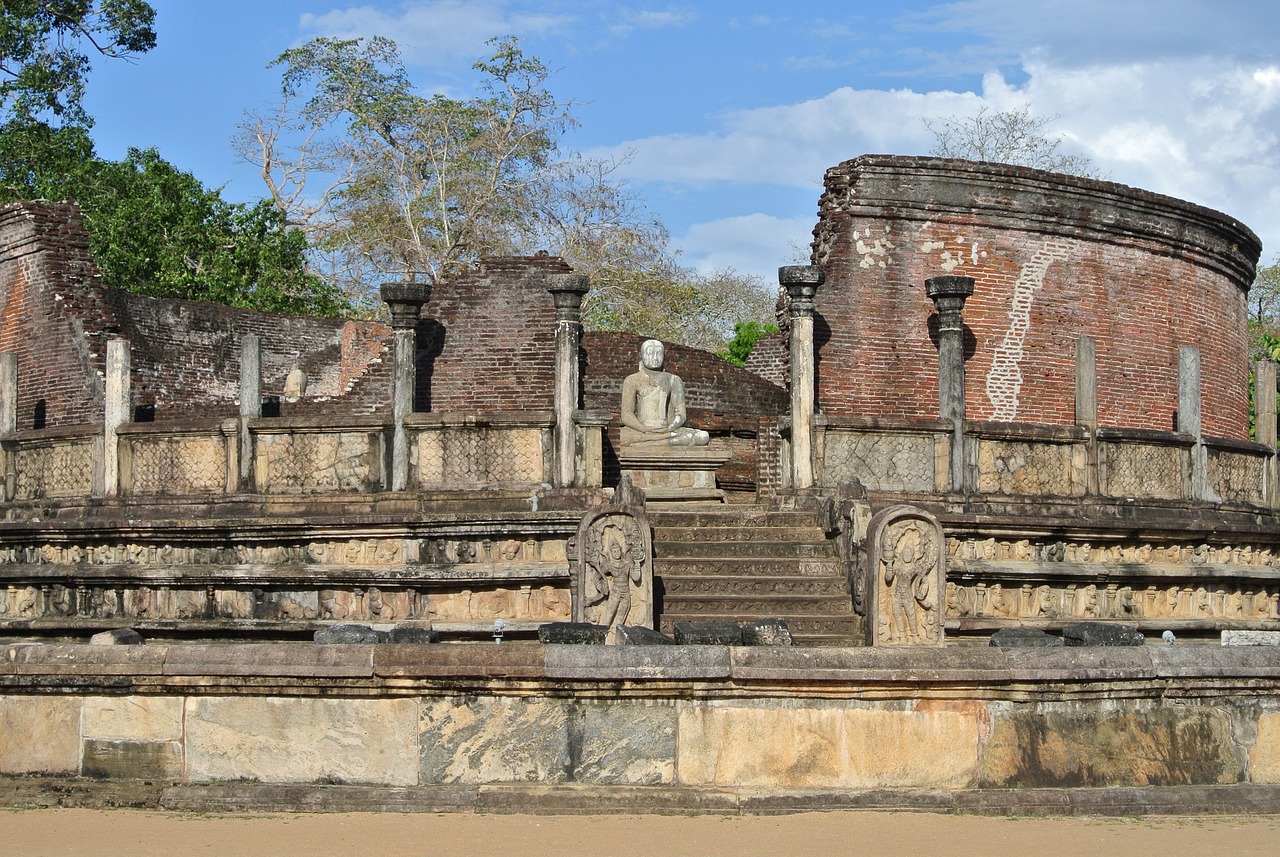
Polonnaruwa is also renowned for its sacred sites. The Quadrangle, or “Dalada Maluwa,” is a compact yet spiritually charged area housing some of the city’s most iconic monuments. Here, the circular Vatadage — a beautifully carved relic house — is believed to have once sheltered the sacred Tooth Relic of the Buddha. Surrounding it are the Thuparama Image House, the elegant Atadage, and the impressive Gal Potha (Stone Book), a massive stone slab inscribed with the achievements of King Nissankamalla.
A highlight of any visit to Polonnaruwa is the Gal Vihara, a breathtaking rock-cut shrine featuring four colossal Buddha statues carved into a single granite outcrop. These serene and timeless figures — including a reclining Buddha over 14 meters long — are considered masterpieces of Sinhalese stone carving, capturing the spiritual essence of Sri Lankan Buddhism.
The ancient city also boasts Hindu shrines and Shiva Devales, reflecting the multicultural heritage that flourished during Polonnaruwa’s time as a bustling trade center. The city’s layout, with its wide avenues and carefully planned reservoirs, showcases the sophisticated urban planning that made Polonnaruwa a model of medieval city-building.
Beyond the ruins, Polonnaruwa’s modern town offers a blend of old and new, with local markets, friendly cafes, and a laid-back atmosphere that invites visitors to linger. Cycling is a popular way to explore the vast archaeological park, allowing travelers to soak in the scenery at a leisurely pace.
Polonnaruwa is more than just an ancient city — it’s a window into Sri Lanka’s golden age, where history, culture, and spirituality come together to tell the story of a civilization that once shone brightly and continues to inspire all who walk its ancient paths.